WhatsRecipe

Casarecce with Almond Pesto (Sicilian-Style, Traditional Fine-Dining Approach)

A noble, sunlit pasta course inspired by Sicily: casarecce dressed in a silky almond pesto—herbaceous basil, toasted almonds, aged cheeses, and a bright lemon finish. The goal is perfume and texture, not heaviness: the sauce must cling like velvet, never turn greasy, never taste “blended.”

Prep15 minTotal15 minEasy~670 kcal per serving (Serves 4)

Recipe video
Method

  1. 1

    Mise en place (set the kitchen like a brigade station) Scale everything: pasta, almonds, basil, cheeses, oil, lemon, salt. Place each in small bowls. Basil care: rinse quickly, then dry thoroughly (salad spinner + paper towel). Wet basil weakens the pesto and dulls flavor. Cheese prep: grate very fine (Microplane preferred). Fine grate melts into the sauce instead of forming grains. Garlic: cut in half and remove the green germ (it can turn bitter). Pasta station: large pot, plenty of water; keep a ladle and a heatproof mug ready for pasta water. Critical points: basil must be dry; cheese must be fine; set up pasta water capture before cooking.

  2. 2

    Toast the almonds (flavor + aroma, never dark) Heat a dry pan on medium-low. Add 80 g / 2.8 oz almonds. Toast 3–5 minutes, shaking often, until lightly golden and fragrant. Immediately transfer to a cool plate to stop cooking. Critical points: almonds go from perfect to bitter fast. You want pale gold, not brown.

  3. 3

    Build the almond pesto (emulsify; do not “cook” it) In a blender/processor: add toasted almonds + garlic + half the basil. Pulse to a coarse crumble. Add remaining basil, lemon juice, salt, pepper. Pulse again—short bursts. With the motor running low, stream in olive oil slowly until glossy and spoonable. Add Parmigiano + Pecorino; pulse just until combined (no long blending). Taste: adjust salt/lemon. The pesto should taste slightly intense now—it will mellow when diluted with pasta water. Critical points: over-blending heats basil and turns it dark; streaming oil makes a stable emulsion; add cheese at the end to avoid clumping and overworking.

  4. 4

    Cook the casarecce (al dente is non-negotiable) Bring a large pot of water to a rolling boil. Salt generously: it should taste “like the sea.” Add casarecce; stir well for the first 30 seconds to prevent sticking. Cook to very al dente (check 2 minutes before package time). Reserve pasta water: take 250 g / 8.8 oz before draining. Drain pasta (do not rinse). Critical points: undercook slightly—final texture is set during tossing; reserved water is your sauce’s “second ingredient.”

  5. 5

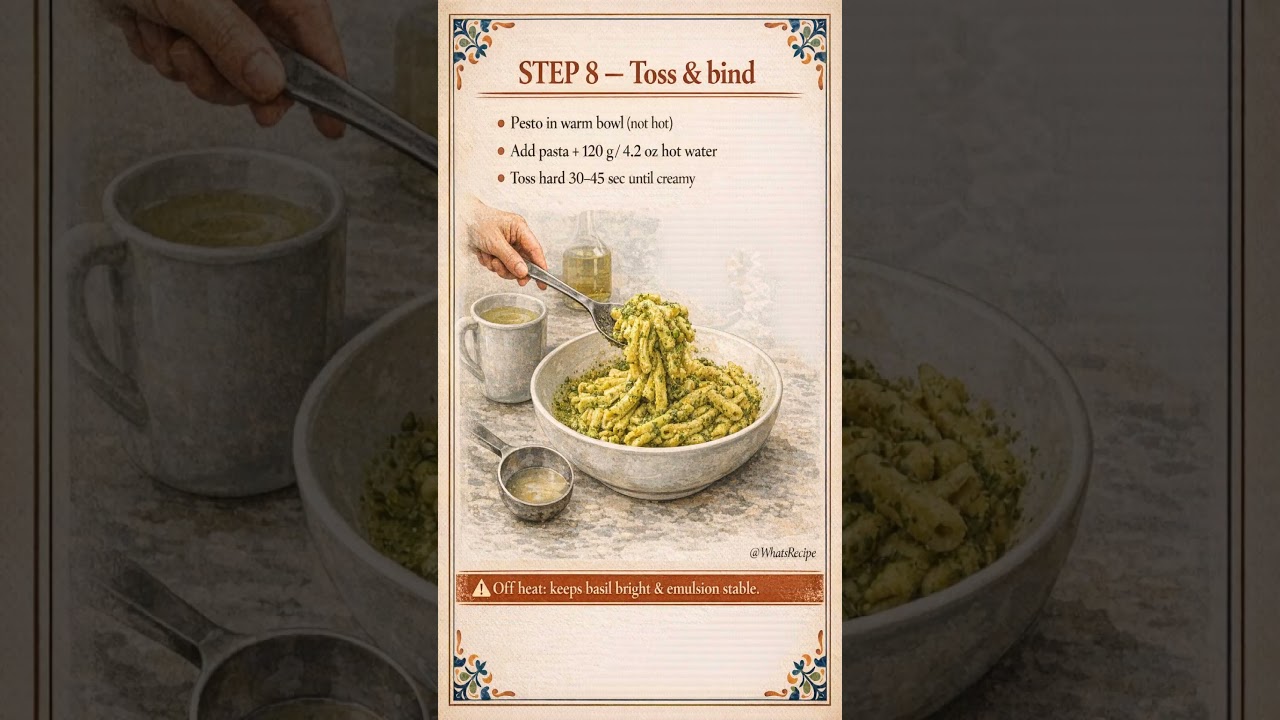
    Marry pasta and pesto (the professional toss) Place the pesto in a large warm bowl (not hot). Add the drained pasta. Add 120 g / 4.2 oz pasta water first. Toss vigorously for 30–45 seconds until the sauce becomes creamy and coats every ridge. Adjust with more pasta water, a little at a time, until you get a silky, clingy glaze (not soupy). Critical points: do this off direct heat to keep basil bright and oil emulsified; pasta water must be hot to bind the sauce.

  6. 6

    Plate like a classic fine-dining first course Twist casarecce into a neat mound using a carving fork and spoon. Finish with: a few drops of olive oil, lemon zest, toasted almond “snow,” and micro-basil. Optional: a light veil of ricotta salata shavings for a sharper Sicilian accent. Critical points: garnish should lift the aroma, not bury it; keep portions elegant—this is a refined primo. Type of dish Traditional Italian Primo Piatto (pasta course) — Sicilian-inspired.

Chef notes