WhatsRecipe

Contemporary Italian pasta (modern, fresh, citrus-forward).

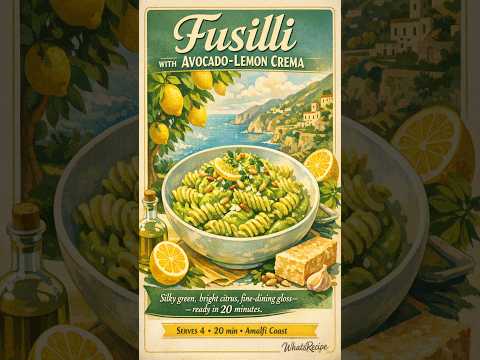
Fusilli with Avocado–Lemon Crema (Haute Cuisine Style)

A silk-smooth avocado and lemon crema coats spiral fusilli like satin—bright, vegetal, and quietly luxurious. Finished with a chilled bowl technique, micro-herbs, and a precise emulsion for a restaurant-level gloss (inspired by the lemon groves of Italy’s Amalfi Coast).

Prep20 minTotal20 minEasyApproximately 490 kcal per serving

Recipe video
Method

  1. 1

    Mise en place (set yourself up like a pro) Start by chilling your serving bowls in the fridge (or freezer for 5 minutes). This dish is at its best when the crema stays green and aromatic. Bring out: blender (or immersion blender), microplane, citrus juicer, colander, tongs, and a large sauté pan or mixing bowl. Weigh ingredients. Zest the lemon first (zesting after juicing is harder and less fragrant), then juice it. Pick basil leaves and rinse/dry them thoroughly—water dulls the emulsion. Cut avocados only when ready to blend to minimize browning. If using pine nuts, toast them in a dry pan over medium heat until golden and fragrant; remove immediately (carryover heat burns them fast). Critical point: Have a small cup ready for pasta cooking water—this starchy liquid is your “secret sauce engineer.”

  2. 2

    Pasta water: build seasoning from the inside Fill a large pot with water (at least 3–4 L / 3–4 qt). Bring to a rolling boil, then add salt (10 g / 0.35 oz). The water should taste pleasantly saline—this is the only moment you can season the pasta itself. Add fusilli and stir for the first 20 seconds so it doesn’t stick. Cook to al dente (usually 1–2 minutes less than the package suggests). Critical point: Before draining, scoop 180 g / 6.3 oz pasta water into a cup. This water contains starch that helps your crema cling and shine.

  3. 3

    Avocado–lemon crema (the refined, stable base) In a blender: add avocado flesh (300 g / 10.6 oz), lemon juice + most of the zest (40 g / 1.4 oz total), basil (10 g / 0.35 oz), olive oil (30 g / 1.1 oz), grated Parmigiano (40 g / 1.4 oz), optional garlic (2 g / 0.07 oz), a pinch of salt, and black pepper. Blend until completely smooth—no flecks, no chunks. If needed, add 30–60 g / 1–2 oz of the reserved warm pasta water to help the blades move and to start the emulsion. Taste: you want a clean lemon lift, not sourness. Adjust with a pinch of salt first, then a few drops of lemon if needed. Critical point: Do not cook this crema directly in a hot pan—it can turn dull and lose aroma. We finish off-heat.

  4. 4

    Drain, then “dress” with precision (gloss without heat damage) Drain the fusilli quickly. Return it to the pot (off the heat) or a large mixing bowl. Add about ½ of the crema first, then toss. Add 60–90 g / 2–3 oz pasta water gradually while tossing to create a silky coating. Now add the remaining crema little by little until you reach a luxurious, glossy texture. You’re not trying to drown the pasta; you’re trying to lacquer it. The spirals should look evenly coated, not pooled. Critical point: If the pasta seems dry, add more pasta water before adding more oil—water + starch keeps it emulsified and light.

  5. 5

    Final seasoning and aromatic lift Taste a single piece of pasta. Adjust salt and pepper. Add a whisper of fresh lemon zest right at the end for fragrance. If using pine nuts, fold in half now; save half for plating so you get crunch on top. For an extra haute detail: drizzle a few drops of olive oil on the finished pasta (not a full spoonful). This is aroma, not grease.

  6. 6

    Plating like a fine-dining kitchen Use chilled bowls. Twirl fusilli into a neat mound with tongs—height reads “restaurant.” Finish with: micro herbs, remaining pine nuts, a dusting of Parmigiano (optional), and a final microplane of lemon zest “snow.” Serve immediately: avocado crema is most vivid and perfumed in the first 10–12 minutes.

Chef notes