WhatsRecipe

Roman pasta main course (primo piatto)

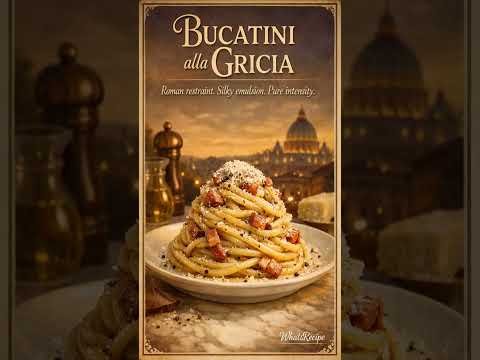
Bucatini alla Gricia — Guanciale, Pecorino, Black Pepper. Roman luxury in three notes.

A high-cuisine interpretation of a Roman classic: immaculate mise en place, precise heat control, and a silky emulsion (no cream—ever). The goal is a sauce that clings like satin to every hollow strand of bucatini, with pepper warmth and pecorino depth.

Prep25 minTotal25 minEasyApproximately 825 kcal per serving

Recipe video
Method

  1. 1

    Mise en place (the non-negotiable luxury). Set out: a large pot, tongs, a spider/strainer, a wide sauté pan, a ladle, and a large mixing bowl (or metal bowl). Finely grate the pecorino until it looks like snow—coarse shreds will clump later. Crack pepper fresh; pre-grinding hours earlier dulls aroma. Cut guanciale into even lardons (matchsticks), about 5–7 mm thick: too thin and it turns bitter before rendering; too thick and it stays chewy. Keep a small cup of cold water nearby (for emergency temperature control) and a warm plate for serving.

  2. 2

    Start the pasta water (timing is part of flavor). Bring a large pot of water to a rolling boil. Salt it so it tastes pleasantly savory, not like the sea. Bucatini need space—crowding cools the water and increases sticking. Once boiling, drop the bucatini and stir for the first 30 seconds to prevent clumping. Set a timer for 2 minutes less than the package suggests: you’ll finish the cooking in the pan.

  3. 3

    Render the guanciale slowly (build the sauce’s backbone). Place guanciale in a wide pan cold, then set to medium-low heat. Starting cold encourages gentle rendering: fat becomes clear and sweet, not scorched. Stir occasionally. You want golden edges and translucent fat in the pan—aromatic, not smoky. If it browns too fast, lower heat; if needed, add 1–2 tbsp water to slow the Maillard reaction while the fat continues to render.

  4. 4

    Bloom the black pepper (perfume, not burn). When the guanciale is crisp-tender and the fat is shimmering, lower the heat slightly. Add the pepper and toast it 10–20 seconds in the fat, stirring. The goal is a warm, floral aroma. If it smells sharp or acrid, it’s burning—move the pan off heat immediately.

  5. 5

    Reserve pasta water properly (your “liquid silk”). Just before the pasta is ready to transfer, ladle out at least 180 g / 6.3 oz of starchy pasta water. This water is your emulsifier. Keep it hot, but not boiling—boiling water can destabilize the cheese later.

  6. 6

    Finish the pasta in the pan (starch meets fat). Transfer bucatini into the guanciale pan 2 minutes early. Add about 90 g / 3.2 oz pasta water. Toss vigorously over medium heat for 60–90 seconds. You’re extracting surface starch and combining it with rendered fat—this is the foundation of the emulsion. The pasta should look glossy, and the pan liquid should slightly thicken. If it dries out, add more water a splash at a time.

  7. 7
  8. 8

    Plate like a chef (temperature + tension). Warm your plates. Twirl bucatini into a tall nest using tongs and a ladle for support. Spoon a little of the glossy sauce from the pan over the top. Finish with a final dusting of pecorino and one confident turn of black pepper. Serve immediately—the sauce is at its silkiest in the first minutes.

Chef notes