WhatsRecipe

Seafood pasta (Southern Italian / Pugliese-inspired)

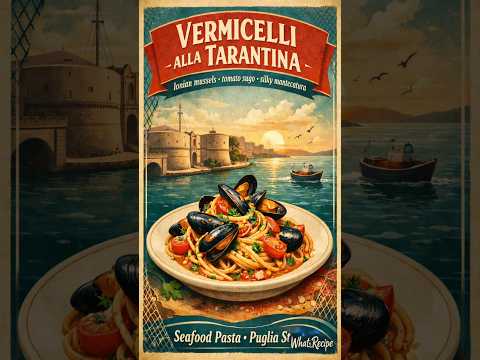
Vermicelli alla Tarantina (Tomato-Braised Mussels) — High-Precision Coastal Pasta

A refined homage to Taranto’s Ionian waterfront: sweet tomato sugo enriched with mussel liquor, lifted by chili and parsley, and finished with a glossy olive-oil emulsion that clings to vermicelli like silk.

Easy~620 kcal per serving (varies with oil/breadcrumbs)

Recipe video
Method

  1. 1

    Mise en place (set yourself up like a pro kitchen) Do this before heat touches pan. Mussels: Rinse under cold water. Pull beards. Scrub shells. Discard any cracked mussels. Tap open ones—if they don’t close, discard. Aromatics: Crush garlic cloves (keep them “whole-ish” so they perfume without turning bitter). Chop parsley. Halve cherry tomatoes (if using). Liquids: Measure wine and passata. Keep a fine strainer ready. Pasta station: Set a large pot filled with water (do not salt yet). Have tongs and a spider/strainer ready. Critical point: Mussels can be sandy. Scrub well and always strain the mussel cooking liquid later.

  2. 2

    Open the mussels (extract flavor + the “sea stock”) Heat a large pot or wide sauté pan on high. Add 15 g / 0.5 oz olive oil and half the garlic. Add mussels, toss once, then add white wine. Cover immediately. Steam 3–5 minutes, shaking the pot once or twice, until most mussels open. Remove from heat. Using tongs, transfer mussels to a tray. Discard any that stayed closed. Strain the pot liquid through a fine sieve (or sieve + paper towel) into a bowl. Critical point: Keep the liquid—this is your umami engine. Strain carefully to remove grit.

  3. 3

    Build the Tarantina sugo base (control sweetness + depth) In a wide pan, warm 45 g / 1.6 oz olive oil on medium. Add remaining garlic and chili. Let garlic sizzle gently (no browning) for 60–90 seconds. Add passata + cherry tomatoes (if using). Stir, then add about 180 g / 6.3 oz of the strained mussel liquor (start here; you can add more later). Simmer 10–12 minutes until the sauce tastes round, not raw. Pepper lightly. Critical point: Do not oversalt yet—mussel liquor is naturally salty.

  4. 4

    Prepare the finishing texture (glossy, restaurant-style cling) Keep sauce at a lively simmer. Add a splash more mussel liquor only if it feels too thick. Stir in half the parsley now (reserve the rest for the end). Critical point: Your goal is a sauce that coats the back of a spoon. Too watery = slides off pasta. Too thick = heavy.

  5. 5

    Cook pasta precisely (timing is everything) Bring the pasta water to a rolling boil. Salt it to taste (moderately—remember the seafood). Cook vermicelli until 2 minutes shy of package time (very al dente). Reserve pasta water (at least 250 ml / 1 cup). Drain quickly. Critical point: Undercook slightly—final cooking happens in the sauce for maximum flavor absorption.

  6. 6

    Marry pasta + sauce (the “mantecatura” moment) Transfer drained vermicelli straight into the simmering sugo. Toss vigorously with tongs for 60–90 seconds. Add small splashes of reserved pasta water until the sauce turns silky and cohesive. If you want extra shine, drizzle a teaspoon of olive oil and toss again. Critical point: This emulsification is your high-cuisine upgrade—don’t rush it, and keep heat medium-high so it binds.

  7. 7

    Add mussels at the end (avoid rubbery seafood) Add mussels back to the pan just to warm through: 30–45 seconds. Turn off heat. Add remaining parsley and optional lemon zest. Taste and adjust salt only now. Critical point: Mussels toughen if cooked too long—treat them like a finishing ingredient.

  8. 8

    Plate like a coastal fine-dining trattoria Twirl vermicelli into warm bowls. Nestle mussels on top for height. Optional: sprinkle pangrattato for a crisp contrast. Finish with a final thread of olive oil and a touch of black pepper.

Chef notes