WhatsRecipe

Italian Primo Piatto — Pasta

Bavette al Pesto — “Ligurian Emerald” Fine-Dining Style

Silky bavette coated in a cold-emulsified basil pesto, finished with a glossy sheen of starchy pasta water and a precise, coastal-mineral salinity. Think: a terrace above the Ligurian Riviera—sun, sea breeze, and a mortar still warm from handwork.

Prep15 minTotal15 min 2 servingsEasy700 kcal

Recipe video
Method

  1. 1

    Mise en place (precision first) Rinse basil quickly in cold water, then dry thoroughly (salad spinner + paper towel). Any water dilutes flavor and turns pesto dull. Chill a mixing bowl (or the mortar) with a few ice cubes, then discard and wipe dry. Weigh all ingredients; grate cheeses ultra-fine (they melt into the emulsion). Split the garlic and remove the green germ to avoid harshness. Set a small pan for pine nuts, a large pot for pasta, and keep a ladle ready for pasta water.

  2. 2

    Toast pine nuts (controlled aroma, no bitterness) Warm a dry pan over low heat. Add pine nuts and toast 2–4 minutes, stirring constantly, until pale gold and fragrant (not brown). Immediately transfer to a cool plate—carryover heat burns them fast. This step deepens the “nutty-butter” note that makes the pesto taste restaurant-level. Critical point: if they darken, they taste bitter and dominate basil.

  3. 3

    Build pesto (cold extraction + gradual fat) In a mortar: crush garlic with a pinch of fine salt into a smooth paste. Add basil in small handfuls; grind with a firm circular motion to bruise leaves and release perfume. Add pine nuts and work until creamy. Add cheeses, then drizzle olive oil slowly while turning the paste—aim for a glossy, spoonable pesto, not oily separation. Optional: add lemon zest at the end for a clean coastal lift. Critical point: keep everything cool so basil stays bright green.

  4. 4

    Pasta water (the “hidden sauce ingredient”) Bring a large pot of water to a rolling boil. Salt it generously until it tastes like the sea (this is your main seasoning). Keep a heatproof cup nearby for pasta water. Critical point: pesto is a cold sauce—your goal is to use hot pasta and starchy water to emulsify off the heat, not “cook” the basil.

  5. 5

    Cook bavette (timing for silk) Drop bavette into boiling water, stir immediately to prevent sticking. Cook until just shy of al dente (usually 1 minute less than package time). Taste: the center should still resist slightly. Reserve 200 ml pasta water (about 0.85 cup). Drain pasta—do not rinse.

  6. 6

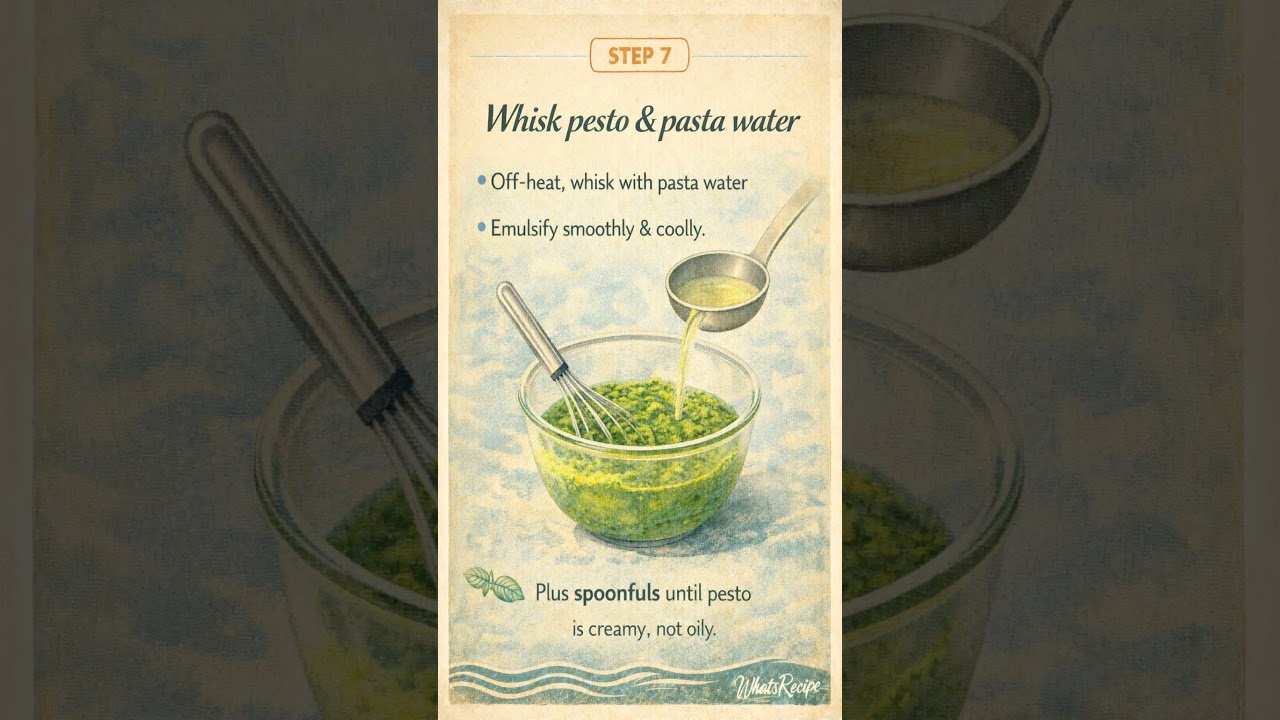
    Emulsify & coat (restaurant gloss) Place pesto in the chilled bowl. Add 2–3 tablespoons hot pasta water and whisk to form a creamy emulsion. Add drained bavette and toss vigorously with tongs. Add more pasta water a splash at a time until the sauce clings in a thin, shiny layer (not soupy). Critical point: if the bowl sits on heat, basil darkens—work quickly and off the stove.

  7. 7

    Plate (fine-dining composition) Twirl bavette into a tall nest using tongs and a spoon. Finish with a micro-drizzle of olive oil (2–3 g / 0.11 oz), a few toasted pine nuts, and tiny basil tips. Optional haute touch: a whisper of extra Parmigiano “snow” around the rim, not on top—so the basil remains the headline.

Chef notes